
We were supposed to go to Universal Studios and spend the day wandering through Nintendo World—an experience none of us had done before. My sister had even packed a Princess Peach–inspired outfit and planned to buy character headbands to complete the look.
My brother and I, however, weren’t thrilled by the idea of spending a full day at a rainy amusement park we could easily visit back in Los Angeles, just a two-hour drive from our family home. My sister complained. She called our parents. Eventually, we reached a compromise. We were going to Nara City.
Somewhere along the journey, I lost cell service. I panicked. I didn’t know which stop we were supposed to get off at. My sister insisted we weren’t lost and didn’t want to leave the train, but I noticed something unsettling: the tourists were gone. I knew I had to ask for help.
While on vacation, my brother and sister rely solely on Wi-Fi. They like being off the grid, permanently on Do Not Disturb. I’m the only one with cell service, which automatically makes me the designated guide. I use Google Maps, but I always double-check my route with a local. Even when I’m standing directly beneath a sign that reads Platform 5, I still turn to the person next to me and ask, “This is Platform 5, right?”
Why am I like this? I’m convinced this is the one trait I inherited from my mom.
My sister, meanwhile, urged me to stop asking questions and just be confident. Easy for her to say—she has experience navigating buses and subways in Singapore and Madrid. This was my first time using public transportation like this. I was giving the directions, which meant I was calling the shots.
We got off at a stop that felt like the middle of nowhere. The platform was empty. There was no ticket office in sight. My sister finally broke and said we couldn’t just stand there all day—we had to get on the next train, no matter what.
Then something unexpectedly delightful happened.
The next train that arrived was a whimsical Kintetsu Nara–Shika Train, painted with deer and filled with tourists. In that moment, we knew we were headed in the right direction. A reminder that there really is safety in numbers—and sometimes in getting lost.
Once in Nara Park, we bought crackers at the entrance and fed the Shika deer on the open, grassy grounds. It was my first time being so close to them, let alone feeding them by hand. Thousands of these protected, free-roaming deer roam the park, greeting visitors as they arrive. As the Nara City Tourism Association explains, they have long been protected as “Messengers of the Gods,” tied to the founding story of Kasugataisha Shrine.
There’s even a proper way to feed them. Before taking a cracker from your hand, the deer will bow—if you know how to ask. Hold the rice cracker (shika senbei) above your head, and the deer bows in return.
When I interact with animals, I feel a profound, nonverbal sense of communication rooted in trust. It’s calming, grounding. It takes me back to childhood weekends spent on a family hacienda in South America, feeding alpacas, chickens, and goats. The deer were incredibly perceptive, responding to subtle cues. I noticed how they lowered their heads in a way that reminded me of our dog bending down to eat. Instinctively, I mirrored the motion. We lowered our heads at the same time.


These deer don’t fear humans. They’re used to us—used to being fed.
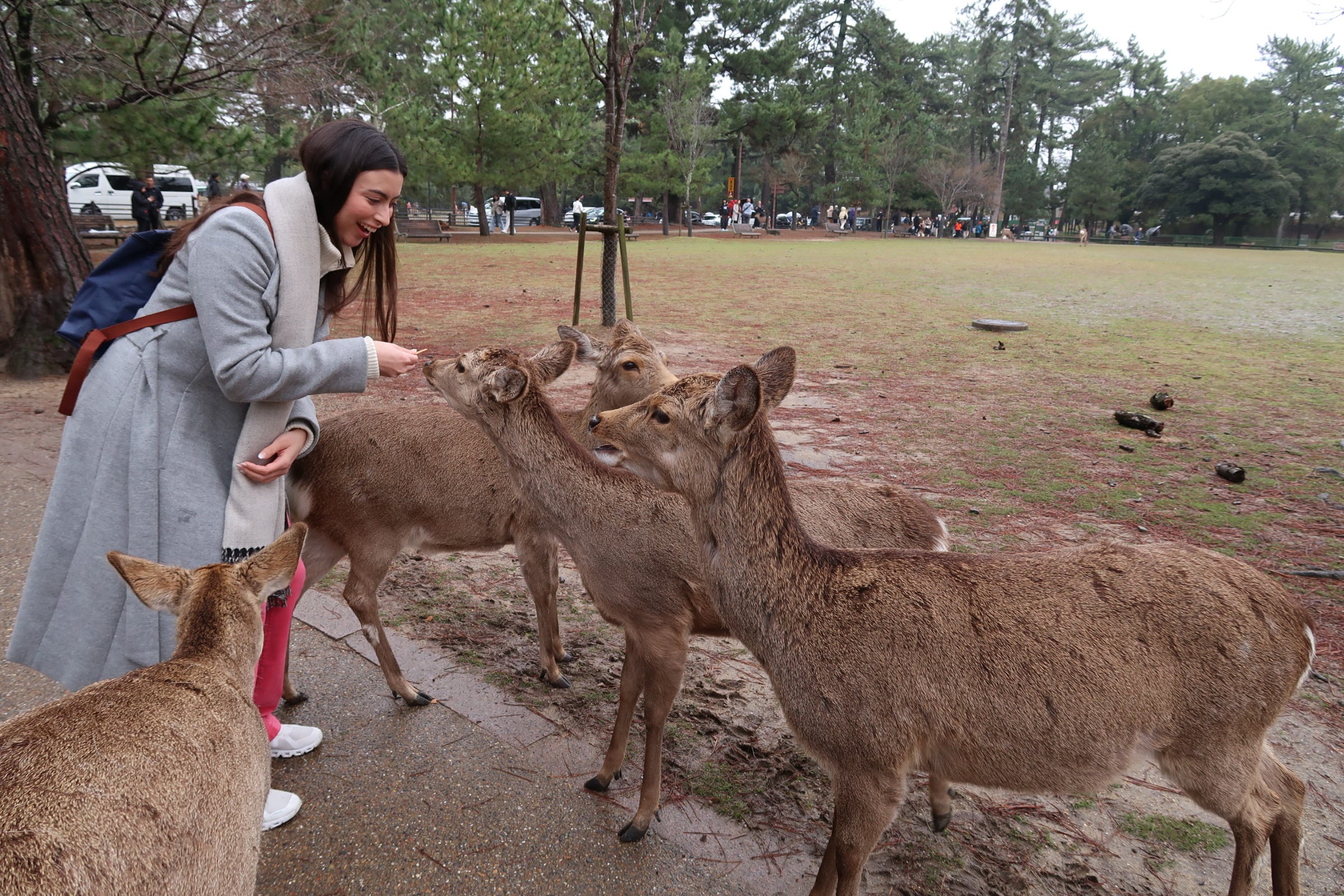
My sister, on the other hand, didn’t hand over her crackers quickly enough and was promptly nudged by an impatient deer demanding more.
Some plans fall through. Others turn into stories you’ll never forget.