
The M+ Museum of Contemporary Art in Hong Kong opened in November 2021 and has already welcomed over 10 million visitors. From the outside, the M+ Museum appears as a horizontal podium with a skinny tower above it. Inside, it has multiple levels filled with light from the skylights above.
I found myself drifting toward the windows, pausing to take in Hong Kong’s urban dense skyline from within the galleries. It wasn’t just the exhibitions that captivated my attention, but the architecture too.
The Sigg Gallery houses the M+ Sigg Collection, which is one of the largest collections of Chinese contemporary art in the world.


There were bright cherry blossom installations, 2-piece women’s outfits, and pop art dollar bills, that filled the space with color, to illustrate culture and value.


My brother, my sister, and I spoke about how the 1970s Chinese art is presented here in Hong Kong from this specific lens. Walking through the museum with my brother and my sister, I kept returning to the same idea about time. However, my sister and I understood it differently.
For her, time felt urgent, even overwhelming. She has just been admitted to an MBA program in the east coast and made the difficult decision to leave her job at a Big Four firm. In her farewell email to her team, she wrote:
“I’ve always lived with a deep awareness of how fleeting time is. That perspective has pushed me to say yes to adventure, to lean into the unknown, and to live with intention. It’s what led me here and it’s what’s guiding me now as I step into a new chapter”.
In one exhibit, a clock read The time is NOW. For her, it wasn’t just another art piece, it was a confirmation of her recent decisions. A friendly reminder to act in your best interest and ultimately to choose yourself.
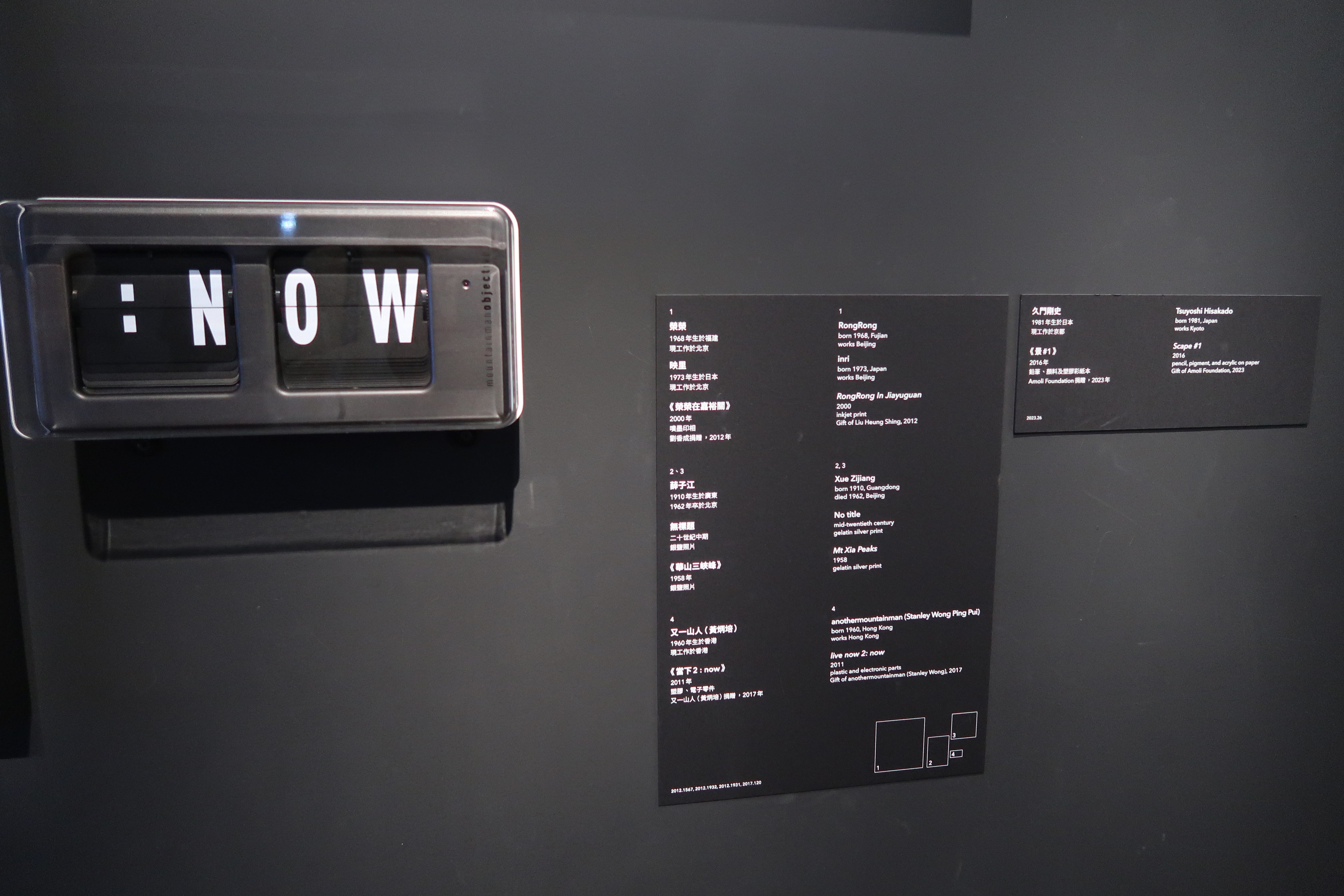
By the time we returned to the Main Hall, my sister wandered into the M+ Shop, flipping through art books and objects. A $300 USD Twenko clock caught her attention. She’s always had a soft spot for visual culture, especially objects that make time feel tangible.
My interpretation moved in a different direction.
It kept returning to a display I saw that illustrated time and speed. In an exhibit, there were small figures moving in endless loops on a spinning wheel, fast and frantic.
But in my own life, I don’t feel time moving that quickly. My days linger. I over prepare for meetings, attend meetings, scroll through my color-coded Google Calendar, and watch events that were planned months ago unfold at a slow pace. The clock is dragging along. It makes me wonder if speed if part of time or something I have projected my pre-concieved notions to. From an outside perspective, everything seems urgent. A pending task needs to be handled immediately. But the routine feels slow and I want to postpone the mundane tasks of my daily schedule.
Meanwhile, my brother was drawn to design and architecture collection located in the East Galleries. He was fascinated by the modular, prefabricated homes, a glimpse of how we might live in the future.


But the idea of future feels misleading. These homes already exists. They are already legal in the United States.
The future, in many ways, isn’t ahead, it’s here.
Around us, other visitors echoed a familiar idea of what the future will look like. “Is this what the future will look like?” So, if the future is already here, what role are we taking in shaping the future?